
Be first to read the latest tech news, Industry Leader's Insights, and CIO interviews of medium and large enterprises exclusively from Energy Tech Review
Top Nuclear Workforce Training Solutions 2026
Nuclear workforce training solutions help energy organizations prepare personnel for specialized technical and safety requirements. With a focus on regulatory alignment, skills validation, procedure readiness and safety culture, they support workforce competence and more reliable nuclear operations.
Solutions
NuScale Power Corporation [NYSE: SMR]
Preparing the Workforce for Advanced Nuclear Operations
John Hopkins, President and Chief Executive Officer
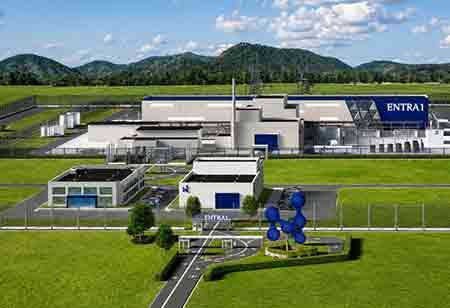
Advanced nuclear projects require more than innovative reactor technology. They depend on a skilled workforce capable of operating complex systems safely and efficiently from the outset. NuScale Power Corporation [NYSE: SMR] recognizes that workforce development is a critical component of successful plant deployment, delivering structured training alongside its small modular reactor (SMR) technology.
Nuclear Workforce Training Solutions News
Nuclear Expansion Turns Workforce Training into a Deployment Constraint
Monday, October 12, 2026
Nuclear workforce training solutions are gaining stronger relevance as governments, utilities and reactor developers prepare for larger nuclear buildout plans. The sector is no longer focused only on traditional operator licensing and plant safety refreshers. It is becoming a wider workforce-development system that must support existing plants, advanced reactors and nuclear supply-chain expansion.
The U.S. Department of Energy awarded more than $49.7 million in April 2026 to 10 university-led projects under its Nuclear Reactor Safety Training and Workforce Development Program. DOE said the funding is intended to grow nuclear safety training programs and curricula as the industry faces rising demand for skilled workers.
This matters because nuclear projects require long training cycles. Reactor operators, radiation protection staff, maintenance technicians, engineers and quality professionals cannot be prepared through short generic courses. They need structured classroom learning, simulator experience, supervised practice and site-specific qualification.
The scale of the workforce challenge is large. ORAU’s Nuclear Energy Academic Roadmap notes that DOE projects the nuclear energy sector will need more than 375,000 skilled workers by 2050 to sustain operating plants and support next-generation reactor deployment.
Building the nuclear workforce requires a clearer path from education into industry. Universities play an important role in preparing engineers and researchers, while community colleges and technical institutions train many of the skilled trades, maintenance specialists and radiation-safety professionals the sector depends on. For utilities and vendors, the goal is to connect those programs directly to the jobs that need to be filled instead of stopping at broad introductions to the industry.
The pressure is not limited to the United States. India’s Department of Atomic Energy reported in July 2026 that it runs orientation training for engineers, supervisors and technicians, skill development programs for technical staff, licensing and qualification for operation and maintenance teams, emergency preparedness training and radiation-safety training.
This shows how national nuclear programs are treating training as an operating requirement. Countries that expand nuclear power without preparing qualified personnel may face delays in licensing, construction, commissioning and long-term plant operation.
The challenge for training providers is coordination. Nuclear employers need curricula that align with regulatory expectations, site procedures and technology type. A training program for an operating light-water reactor may not fully match the needs of an advanced reactor vendor, fuel-cycle facility or nuclear construction project.
As the nuclear sector expands, preparing people for technical and operational roles is becoming just as important as building new facilities. The organizations that make the biggest difference will be the ones that help shorten training timelines without compromising safety culture, technical competence or regulatory expectations.
Advanced Reactors Push Training Providers Toward New Skills Models
Monday, October 12, 2026
Nuclear workforce training solutions are being reshaped by small modular reactors, microreactors and advanced reactor designs that require new qualification pathways. The workforce question is no longer only how to replace retiring personnel at existing plants. It is how to prepare workers for designs, operating models and deployment settings that differ from conventional nuclear stations.
Small modular reactor development is creating new training needs because advanced reactors may use different fuels, passive safety systems, digital controls and factory-based manufacturing approaches. NEUP’s 2026 SMR Summer School at Argonne National Laboratory focused on fast reactors and fuel cycles, with collaboration from the OECD Nuclear Energy Agency’s Nuclear Education Skills and Technology framework.
This type of program points to the need for specialized training beyond standard nuclear engineering coursework. Advanced reactor workers may need stronger knowledge of fuel behavior, modular construction, licensing pathways, safeguards and integrated energy applications. Operators and engineers will also need to understand how first-of-a-kind plants differ from established fleets.
India is also moving advanced nuclear development forward. The Press Information Bureau reported in March 2026 that India’s Nuclear Energy Mission includes a ₹20,000 crore budgetary provision for research, design, development and deployment of small modular reactors. Such programs will require not only reactor design expertise, but also construction, quality, inspection and operating training.
International collaboration is becoming part of the workforce response. The Times of India reported in April 2026 that Rosatom, IIT Bombay and a Bengaluru partner announced a pilot training program for nuclear industry specialists in India. This kind of arrangement shows how reactor technology, education providers and workforce partners may become more closely linked.
Training solutions will need to adapt to new delivery models. Advanced reactor deployment may occur at industrial sites, remote locations or data-center campuses rather than only at large utility-owned plants. That could change the mix of skills required, especially around operations, maintenance, emergency planning and site integration.
Simulation will be central. First-of-a-kind projects cannot rely only on inherited plant experience. Training providers will need digital simulators, procedure-based practice and scenario learning that reflect new system behavior before commercial operation begins.
The challenge is avoiding premature standardization. Advanced reactor designs are not identical. A program built around one technology may not transfer cleanly to another. Training providers must balance common nuclear fundamentals with design-specific qualifications.
Nuclear workforce training solutions are becoming advanced-reactor readiness platforms. Their strongest value will come from preparing workers for new technologies while maintaining the rigor expected in nuclear operations and safety oversight.
Digital Simulators and Cross-Sector Reskilling Modernize Nuclear Training
Monday, October 12, 2026
Nuclear workforce training solutions are moving toward simulator-based learning, digital twins and cross-sector reskilling as the industry looks beyond traditional classroom pipelines. The demand for nuclear talent is growing faster than conventional training channels can comfortably support, which is pushing providers to modernize how workers are prepared.
The OECD Nuclear Energy Agency says sustained nuclear technology performance depends on access to a talented and well-qualified workforce. It supports education and training in nuclear law, radiological protection and student pathways into the nuclear field through multinational skills-development efforts.
Demand for skilled nuclear workers is growing well beyond any single country. New reactor projects, plant life extension, decommissioning, fusion research and an expanding supply chain are all competing for many of the same engineers, technicians and skilled trades. That means training programs need to prepare people entering the industry for the first time while also helping experienced workers from related sectors make the transition into nuclear roles.
Skills4Nuclear in Europe is one example of a coordinated approach. The project organized its first webinar in May 2026 around work from the European Forum for Nuclear Workforce and Skills, placing workforce development within a broader discussion of clean energy, innovation and nuclear research.
Reskilling is especially important. Workers from aerospace, shipbuilding, advanced manufacturing, electrical trades and heavy industry may have transferable skills, but they still need nuclear-specific training in safety culture, quality assurance, radiological protection and controlled work practices.
Digital tools can make this transition more practical. Hitachi GE Vernova Nuclear Energy says it is developing a simulator-based education and training platform for plant personnel and plans to work with utilities to share training systems and related resources. Simulator-based training can help workers practice procedures, understand plant response and build confidence before working on live equipment.
More advanced digital environments are also emerging. A research paper on a nuclear power plant digital twin describes a high-resolution simulation environment integrated with a pressurized water reactor simulator to support real-time virtual plant behavior and testing of robotics or autonomous systems. These tools can support future training for inspection, maintenance and remote-operation tasks.
An IAEA technical meeting contribution in 2026 argued for vocational training, reskilling from adjacent sectors, fast-track certification programs, workforce roadmaps and job-skills taxonomies for future fusion deployment. Even if commercial fusion remains separate from current fission operations, its workforce logic reinforces the need for faster and more flexible nuclear training models.
The challenge is validation. Digital training must still map to real qualifications, regulator expectations and employer procedures. A virtual environment is useful only if it improves readiness for actual nuclear work.
The next phase of nuclear workforce training will likely favor blended models. Classroom instruction, simulator learning, supervised qualification and cross-sector reskilling will need to work together.
Nuclear workforce training solutions are becoming digital and competency-based workforce systems. Their value will be measured by whether they help the industry widen its talent base without weakening nuclear safety, technical accuracy and field readiness.
Nuclear Workforce Training Solutions Info
Q1
What Do Top Nuclear Workforce Training Solutions Provide?
Top Nuclear Workforce Training Solutions help nuclear power operators, utilities, engineering firms, research organizations, regulators and training institutions build the knowledge and practical skills required for safe, reliable nuclear operations. Programs commonly combine classroom instruction, simulator-based learning, certification preparation, regulatory compliance education, operational readiness training, leadership development and continuing professional education. They support personnel across the nuclear workforce at different career stages while reinforcing consistent performance and a strong safety culture.
Q2
What Services Are Commonly Included in Nuclear Workforce Training Programs?
Most providers combine technical education with practical instruction that reflects real working conditions. Top Nuclear Workforce Training Solutions often include reactor operations, radiation protection, maintenance procedures, emergency preparedness, cybersecurity awareness, quality assurance and human performance improvement. Many nuclear training programs also use digital learning platforms, realistic simulations, instructor-led workshops, competency assessments and refresher courses. This blend of theory and hands-on practice helps strengthen nuclear workforce training throughout an employee's career.
Q3
Why Is Demand for Top Nuclear Workforce Training Solutions Increasing?
Growing interest in nuclear energy has increased the need for skilled professionals who can safely design, operate, maintain and regulate nuclear facilities. Top Nuclear Workforce Training Solutions help organizations prepare employees as experienced workers retire and advanced reactor technologies enter the industry. Strong nuclear workforce training and modern nuclear training programs also support knowledge transfer between generations, helping organizations maintain a qualified workforce without compromising safety or performance.
Q4
How Are Top Nuclear Workforce Training Solutions Evaluated?
Organizations typically compare providers by reviewing curriculum quality, regulatory alignment, instructor expertise, practical learning opportunities, simulation capabilities and certification support. Top Nuclear Workforce Training Solutions should also demonstrate the ability to adapt training for different job roles while measuring learning progress over time. Decision-makers often look for nuclear safety training that strengthens compliance, supports continuous professional development and reinforces a lasting culture of safety across the workforce.
Q5
What Value Do Nuclear Workforce Training Solutions Create for Organizations?
Effective training helps employees perform their responsibilities with greater confidence and consistency. Top Nuclear Workforce Training Solutions improve workforce competence, reduce human error, strengthen regulatory compliance and support safer plant performance. Well-designed nuclear workforce training also shortens onboarding, improves knowledge retention and prepares employees for changing responsibilities. Over time, these benefits contribute to more dependable facility performance and a stronger pipeline of qualified personnel.
Q6
How Are Innovation and Technology Shaping Nuclear Workforce Training?
Technology is changing how technical knowledge is delivered and measured. Top Nuclear Workforce Training Solutions increasingly combine immersive simulators, virtual reality, digital learning platforms, personalized learning pathways and data-driven performance tracking to strengthen practical skills. Modern nuclear training programs also evolve alongside advanced reactor technologies and digital plant operations while expanding nuclear safety training to address emerging risks. These advances help organizations prepare today's workforce while building capabilities for the next generation of nuclear professionals.
