




 Stuart Martin, Director
Most of the industry has responded by raising the use of cetane or octane levels to produce a stronger combustion event.
“Unlike technologies that seek to alter fuel characteristics, AFC focuses on fuel conditioning, water management, fuel system cleanliness and combustion optimization,” says Stuart Martin, director of AddFuel, an Australian manufacturer of environmentally friendly fuel enhancement solutions.
AddFuel developed AFC around a different ideology—leave the fuel alone and focus on the engine.
AFC uses fuel as a delivery system. It does not alter fuel specifications or affect OEM warranty conditions. Traveling through the combustion system, AFC breaks the residual water globule’s surface tension, reducing them to microscopic particulates that pass through the combustion cycle and vaporize into steam. The process assists fuel system cleanliness and supports cleaner injector operation. AFC also breaks down the hydrocarbons, waxes, gums and varnishes that accumulate over time inside pumps and internal engine components. It helps condition and protect critical fuel system components, keeping equipment running at factory specifications and allowing operators to extend maintenance schedules. “One biodegradable, non-hazardous product doses directly into existing fuel systems and delivers measurable gains in fuel efficiency, emissions and asset life,” says Colin Irvine, finance director.
Martin and Irvine spent five years proving this before taking AFC to market. Testing spanned shipping vessels, mining fleets, power stations and heavy industrial operations, covering diesel, heavy fuel oils, ethanol blends, biofuels and marine fuels. The goal was long-term industrial reliability.
In a four-month trial across three Garland Shipping vessels operating on VLSFO and VLSHFO fuels, AFC delivered an average 5.4 percent reduction in fuel consumption. The vessels saved 340.3 metric tons of fuel and cut CO₂ emissions by over 1,072 metric tons. On land, an iron ore mining deployment reduced daily consumption from 1,390 liters to 1,205 liters. A separate crusher-site evaluation demonstrated fuel consumption reductions of up to 19 percent, leading to further implementation across additional units. These results led to the execution of the Fleet-Wide Supply Agreement upon successful completion of the trial.
-
Unlike technologies that seek to alter fuel characteristics, AFC focuses on fuel conditioning, water management, fuel system cleanliness and combustion optimization.
Independent laboratory testing conducted by VISWA confirmed that AFC-treated fuels remained compliant with ISO 8217 marine fuel specifications, with no material adverse changes observed in density, flash point, sulfur content, viscosity, calorific value, water content or filterblocking characteristics.
Solving the Stored Fuel Problem
Water inside storage tanks is a separate and persistent problem. Refineries and centrifuge systems remove most water from fuel before distribution, but residual water always remains. Left to settle, it feeds the diesel bug, producing the black sludge that degrades stored fuel and damages systems before it ever reaches the engine.
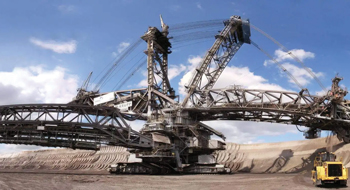 AFC breaks the surface tension of water globules inside storage tanks before they can settle, dispersing them into particulates that move safely through the system rather than accumulating at the bottom. It is the problem most operators have accepted as unavoidable. AFC treats it as operational.
“AFC wasn’t just protecting stored fuel,” says Martin. “It was improving fuel efficiency in live operations, which opened a much larger opportunity around fuel savings, emissions reduction and asset performance.”
Fuel Efficiency Without Equipment Stress
Deploying AFC does not require exhaust integration, temperature-sensitive sensors or infrastructure modifications that systems like AdBlue require. AFC is classified as a non-dangerous good and can be airfreighted anywhere in the world and handled on-site without specialized procedures. Implementation is immediate.
As operators continue to pursue fuel efficiency and emissions-reduction initiatives, AFC offers a practical solution that can be implemented immediately with existing infrastructure. Biofuels are growing fast, particularly across Southeast Asia, where domestic production is accelerating. AFC performs well across biofuel blends, stabilizing the fuel and managing its higher water content. AFC delivers measurable improvement through the infrastructure operators already have.
With over two decades of field application across marine, mining, power generation and industrial operations, AFC has established a proven track record of safe and reliable performance, supported by independent laboratory validation and commercial fleet implementation programs. As global industries continue to pursue operational efficiency and emissions-reduction initiatives, AddFuel remains focused on delivering practical, commercially proven solutions that help customers reduce fuel consumption, lower emissions and improve asset performance without CAPEX investment, equipment modifications or operational disruption through smarter fuel conditioning and combustion optimization.
