


![Envision [HKEX: 1783] | Energy Tech Review | Top AI Wind Turbine Systems Provider In Apac](/company_logos/Untitled-6-ihhpn.jpg "Envision [HKEX: 1783] | Energy Tech Review | Top AI Wind Turbine Systems Provider In Apac")
As utilities and independent power producers across APAC look for higher energy yields, greater grid stability and stronger returns over the life of their assets, the ability to make better decisions in real time is becoming increasingly important. AI can help turbines produce more power, reduce downtime, respond to changing weather and grid conditions, and get more value from infrastructure that is already in place.
In this environment, the future of wind power depends as much on intelligence as it does on mechanical engineering. Envision [HKEX: 1783] has put this idea at the center of how it designs, operates and optimizes turbines, bringing AI and physical engineering together across the asset lifecycle rather than treating software as an add-on.
Engineering Every Decision
Envision’s approach starts with what it calls Physical AI: combining engineering models, real-world operating data and reinforcement learning so turbines can sense changing conditions, learn from experience and continuously improve their performance.
Digital twins are a key part of this approach. According to the company, more than 20 petabytes of operating data and more than 100 engineering, simulation and operational models contribute to digital representations of turbines and their individual components. These models can help anticipate performance issues, identify anomalies and support predictive maintenance before failures affect production.
These models are designed to evolve with the turbines themselves. As new operating data comes in, it can be used to refine predictions and decisions as conditions change.
That feedback loop also extends into the physical design of the turbines. Envision designs and validates major components—including blades, generators, converters, bearings and gearboxes—in-house. This creates a link between the physical machinery and the digital models, allowing lessons from manufacturing and deployment to inform future engineering and optimization. In other words, AI is not simply added to the turbine; it is designed alongside it.
Integration as Strategy
Intelligence at the turbine level is only part of the picture. The next challenge is making different energy assets work together. Envision’s strategy therefore extends beyond wind turbines to energy storage, green hydrogen and digital energy management.
At the center of this architecture is EnOS, Envision’s AI-enabled Industrial Internet of Things (IIoT) operating system for renewable assets and energy management. EnOS connects renewable assets, industrial operations, batteries and grids through a common digital ecosystem, giving operators greater visibility and helping coordinate these resources.
The same thinking applies to project development. Envision’s Smart Wind Farm model covers the lifecycle of a renewable project, from resource assessment and engineering design through construction, deployment and long-term operations. Weather forecasting, analytics and digital twins are built into the operating model, allowing decisions to change as conditions evolve rather than relying solely on assumptions made at the start of a project.
AI in Action
The value of this approach becomes most apparent when wind projects have to operate in demanding conditions. At Qushan Wind Farm, Envision is using repowering to replace older turbines with newer, more efficient models. By combining physical upgrades with digital technologies, the project aims to improve performance while making better use of existing infrastructure.
Australia’s mining industry presents another demanding environment. Envision’s projects in the region require equipment and digital systems that can operate reliably across challenging weather conditions, resource availability and electricity demand. By combining customized turbine engineering with digital management systems, the company can adapt its approach to the conditions of different sites.
The same capabilities are relevant in offshore and high-altitude environments, where weather and operating conditions can place additional demands on equipment and control systems. Across these applications, AI goes beyond a software feature. It can support predictive maintenance, digital-twin analysis, reinforcement learning and weather-based operations.
This combination of physical engineering and digital intelligence is particularly relevant in APAC, where renewable projects span a wide range of climates, terrain and grid conditions. The region provides a demanding proving ground for technologies that need to coordinate generation, storage and grid requirements across very different operating environments.
Envision’s international scale provides further context for this strategy. According to the company, it has ranked No. 1 globally in wind turbine orders for four consecutive years, while continuing to expand its presence in AI-powered energy systems and storage.
As renewable power systems become more interconnected, the boundaries between a turbine, a storage asset and a digital platform are likely to become less distinct. Generation, forecasting, maintenance, storage and grid management increasingly need to work together as parts of a single system.
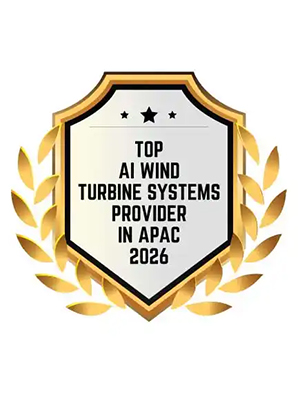
By combining AI-enabled turbine platforms, digital twins, predictive maintenance and integrated energy management across diverse APAC deployments, Envision is positioning its technology around this broader shift in renewable infrastructure: from individual assets operating independently to intelligent systems that can continuously sense, adapt and optimize. This integrated approach has earned Envision recognition as the Top AI Wind Turbine Systems Provider in APAC 2026.
Just as wind turbines were once defined primarily by mechanical engineering, intelligence is becoming an increasingly important characteristic of next-generation renewable infrastructure.
In this environment, the future of wind power depends as much on intelligence as it does on mechanical engineering. Envision [HKEX: 1783] has put this idea at the center of how it designs, operates and optimizes turbines, bringing AI and physical engineering together across the asset lifecycle rather than treating software as an add-on.
Engineering Every Decision
Envision’s approach starts with what it calls Physical AI: combining engineering models, real-world operating data and reinforcement learning so turbines can sense changing conditions, learn from experience and continuously improve their performance.
Digital twins are a key part of this approach. According to the company, more than 20 petabytes of operating data and more than 100 engineering, simulation and operational models contribute to digital representations of turbines and their individual components. These models can help anticipate performance issues, identify anomalies and support predictive maintenance before failures affect production.
These models are designed to evolve with the turbines themselves. As new operating data comes in, it can be used to refine predictions and decisions as conditions change.
That feedback loop also extends into the physical design of the turbines. Envision designs and validates major components—including blades, generators, converters, bearings and gearboxes—in-house. This creates a link between the physical machinery and the digital models, allowing lessons from manufacturing and deployment to inform future engineering and optimization. In other words, AI is not simply added to the turbine; it is designed alongside it.
Integration as Strategy
Intelligence at the turbine level is only part of the picture. The next challenge is making different energy assets work together. Envision’s strategy therefore extends beyond wind turbines to energy storage, green hydrogen and digital energy management.
At the center of this architecture is EnOS, Envision’s AI-enabled Industrial Internet of Things (IIoT) operating system for renewable assets and energy management. EnOS connects renewable assets, industrial operations, batteries and grids through a common digital ecosystem, giving operators greater visibility and helping coordinate these resources.
The same thinking applies to project development. Envision’s Smart Wind Farm model covers the lifecycle of a renewable project, from resource assessment and engineering design through construction, deployment and long-term operations. Weather forecasting, analytics and digital twins are built into the operating model, allowing decisions to change as conditions evolve rather than relying solely on assumptions made at the start of a project.
AI in Action
The value of this approach becomes most apparent when wind projects have to operate in demanding conditions. At Qushan Wind Farm, Envision is using repowering to replace older turbines with newer, more efficient models. By combining physical upgrades with digital technologies, the project aims to improve performance while making better use of existing infrastructure.
Australia’s mining industry presents another demanding environment. Envision’s projects in the region require equipment and digital systems that can operate reliably across challenging weather conditions, resource availability and electricity demand. By combining customized turbine engineering with digital management systems, the company can adapt its approach to the conditions of different sites.
-
The future of wind power depends as much on intelligence as mechanical engineering.
The same capabilities are relevant in offshore and high-altitude environments, where weather and operating conditions can place additional demands on equipment and control systems. Across these applications, AI goes beyond a software feature. It can support predictive maintenance, digital-twin analysis, reinforcement learning and weather-based operations.
This combination of physical engineering and digital intelligence is particularly relevant in APAC, where renewable projects span a wide range of climates, terrain and grid conditions. The region provides a demanding proving ground for technologies that need to coordinate generation, storage and grid requirements across very different operating environments.
Envision’s international scale provides further context for this strategy. According to the company, it has ranked No. 1 globally in wind turbine orders for four consecutive years, while continuing to expand its presence in AI-powered energy systems and storage.
As renewable power systems become more interconnected, the boundaries between a turbine, a storage asset and a digital platform are likely to become less distinct. Generation, forecasting, maintenance, storage and grid management increasingly need to work together as parts of a single system.
By combining AI-enabled turbine platforms, digital twins, predictive maintenance and integrated energy management across diverse APAC deployments, Envision is positioning its technology around this broader shift in renewable infrastructure: from individual assets operating independently to intelligent systems that can continuously sense, adapt and optimize. This integrated approach has earned Envision recognition as the Top AI Wind Turbine Systems Provider in APAC 2026.
Just as wind turbines were once defined primarily by mechanical engineering, intelligence is becoming an increasingly important characteristic of next-generation renewable infrastructure.
