
Renewable energy development platforms are becoming essential tools for managing the growing number of clean energy projects worldwide. As investments in solar, wind, energy storage and other renewable technologies continue to increase, organizations need efficient ways to manage project complexity, improve operational performance and meet sustainability goals. Renewable energy development platforms integrate project planning, data management, performance monitoring and compliance activities into a single system, helping organizations make informed decisions towards a cleaner and more sustainable energy future.
Be first to read the latest tech news, Industry Leader's Insights, and CIO interviews of medium and large enterprises exclusively from Energy Tech Review
Top Renewable Energy Development Platforms 2026
Renewable energy development platforms help teams plan and manage clean energy projects through digital project intelligence. With a focus on site evaluation, permitting visibility, financial modeling and execution tracking, they support stronger project decisions and more reliable renewable deployment.
Solutions
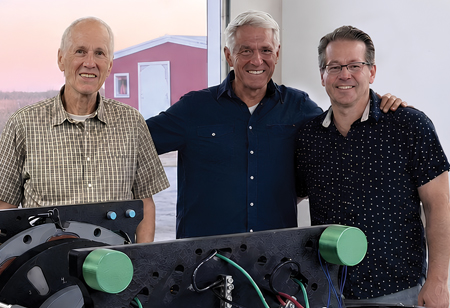
Venturi
Changing the Economics and Architecture of Reliable Power
Rick Wood, CEO, BS in Finance
The challenge with power infrastructure isn’t simply generating more electricity. It’s the complicated, expensive machinery required to make sure the electricity is available when it’s needed, in the quantity required, and with enough resilience to keep critical operations running when demand surges or infrastructure falters.
State of Industry
Deep Dive
Matching Renewable Power to Intensive Demand
Renewable projects can be constrained as much by grid access, storage sizing, permitting and mismatched load profiles as by generation design itself. The problem is sharper where electricity demand must remain steady across long hours. Data centers and controlled-environment farms cannot simply reduce consumption whenever output falls. The real test, then, is how well a power system links generation to storage and responds when demand moves beyond the expected range.
Leadership Perspective

Dashiell Corporation
The Evolution and Integration of Renewable Energy
Jim Helvig, P.E., Vice President of Operations
Jim Helvig, P.E., Vice President of Operations at Dashiell Corporation, Madison Operations, has been in the utility and renewable energy industry for over 24 years. He holds a BSEE from the University of Minnesota’s Institute of Technology and has 25 years of practical military and utility industry leadership experience. Before that, Jim worked in the construction and land development industry. He has held every engineering, project management, and leadership position, from Graduate Engineer to President, and has applied his previous experiences to effectively develop a culture that keeps the end in mind.
Renewable Energy Development Platforms Info
Q1
What Do Top Renewable Energy Development Platforms Offer to Modern Energy Projects?
Top Renewable Energy Development Platforms encompass technologies and systems that support cleaner power generation, energy storage, distribution and dependable electricity delivery. Depending on their design, these platforms may integrate renewable generation, storage components, power management and modular infrastructure to serve different applications. Their role extends from residential developments and commercial facilities to industrial operations and large data centers. The central objective is to match available power with actual demand while addressing reliability, cost and infrastructure constraints. Understanding how these components work together helps decision-makers assess whether a platform fits their energy requirements and long-term operating plans.
Q2
Which Organization Did Energy Tech Review Recognize in 2026?
Energy Tech Review recognized Venturi as its Top Renewable Energy Development Platform 2026. The recognition places the company within a category addressing evolving approaches to power generation, energy storage and electricity reliability. Venturi's work focuses on regenerative energy technology intended to support continuous power across residential, commercial, industrial and data center applications. The recognition comes as organizations explore alternatives to conventional power architectures, particularly where uninterrupted electricity and adaptable capacity are important. Venturi's recognition also reflects the publication's focus on energy technologies moving from development toward broader commercial applications.
Q3
Why Is Demand Growing for Renewable Energy Development Platforms?
Demand for Top Renewable Energy Development Platforms is shaped by rising electricity consumption, decarbonization goals and concerns about grid capacity. Data centers require dependable power for continuous computing, while industrial facilities need to limit interruptions that can affect production and operating costs. Residential developments may also face expensive grid extensions or limited access to established infrastructure. These conditions encourage interest in distributed generation, energy storage and more flexible power arrangements. The right approach depends on local energy resources, connection availability, demand patterns and the cost of maintaining reliable service. Platforms that address these factors can help project planners assess practical alternatives to conventional infrastructure.
Q4
How Are Technology and System Design Changing Renewable Energy Platforms?
Top Renewable Energy Development Platforms increasingly combine generation equipment, energy storage and controls to respond to changing electricity requirements. Modular designs can allow capacity to expand as demand grows, while monitoring and control systems help operators understand performance under different operating conditions. Integration matters because generation and storage must work together rather than function as disconnected components. Decision-makers should examine output consistency, response time, component lifespan, maintenance requirements and compatibility with existing infrastructure. Renewable generation also requires careful consideration of variability and storage needs. Claims about efficiency or reduced costs should be validated through independent testing and performance data under representative operating conditions.
Q5
What Should Organizations Evaluate Before Adopting a Renewable Energy Platform?
Top Renewable Energy Development Platforms should be evaluated against site conditions, required capacity, reliability targets and total ownership costs. Organizations need to consider installation complexity, permitting, grid interconnection, maintenance access and the consequences of equipment failure. Storage capacity and response characteristics should match actual demand rather than theoretical peak performance alone. Warranty coverage, service availability and independently verified output can help clarify long-term risks. For critical facilities, redundancy and recovery procedures are especially important. A suitable platform must demonstrate that its technical design, commercial readiness and support arrangements align with the project's operational requirements.
Q6
What Specific Capabilities Supported Venturi's Recognition?
Venturi's Top Renewable Energy Development Platform 2026 recognition is associated with its Venturi Omega regenerative power system. The platform combines motor-generator operation with an ultracapacitor energy buffer designed to maintain stored energy as demand changes. Its modular architecture is intended to let remaining units support operation when an individual unit requires maintenance or fails. Venturi also reports developing proprietary technology protected by patents and trade secrets, with configurations intended for applications ranging from homes to large data centers. Together, these documented design features establish the technical basis for its recognition while illustrating how alternative power architectures are being developed for varied electricity requirements.
